

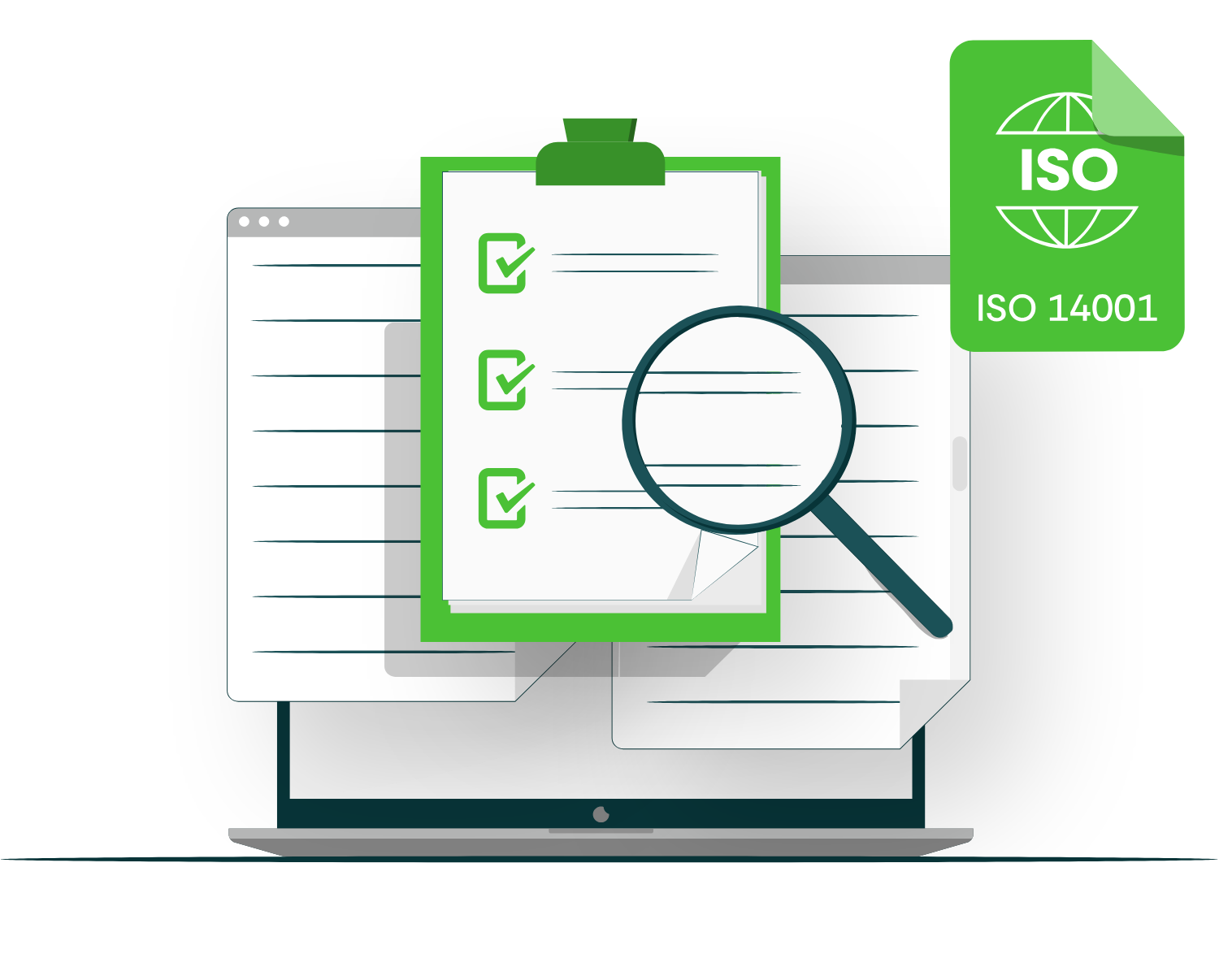
In April ISO released a new version of the ISO14001 environmental management systems standard. Today, CertiKit publishes an update to its popular ISO14001 toolkit (Version 3) to cater for the changes, and to continue the process of continual improvement of this toolkit.
As always, the new version of the toolkit will be available automatically to existing customers under our lifetime updates promise. Simply log in to your account on our website, and download the new toolkit.
It’s worth spending a few minutes to understand the changes between the 2015 version and the 2026 version of the ISO14001 standard. It’s unlikely that anyone would claim the changes are big, but if you’re transitioning from a 2015-certified EMS to a 2026 one then there are a few adjustments you will need to make.
What’s New in the 2026 Version of the ISO14001 Standard?
First, there are the heading changes. These have been introduced to make the ISO14001 standard more fully match the current definition of the Harmonized Structure which is ISO’s definition of a “standard management system” which is used in all of their similar standards.
Then there are the new requirements. Not as many as you might think, but you will now need to show that you are managing changes to the EMS, place more emphasis on specific contextual issues such as climate, biodiversity and resources, adopt a lifecycle approach and show more clearly that management commitment is in place.
In many cases, the changes to the wording of the standard are designed to more explicitly emphasise points that were already implied in the previous version. In Clause 4 Context of the organization, examples are now given of “environmental conditions” that may be issues for the organization, and the need to adopt a “lifecycle perspective” has been emphasised.
In Clause 8 Operation the term “outsourced processes” has been replaced with “externally provided processes” and in Clause 9.2 Internal audit, a short list of required documented information has been added.
Changes have also been made to clarify the meaning of places within the standard where documented information is mentioned.
Lastly, the Annex A guidance has been updated to reflect the above amendments to the requirements.
These changes are summarised in the following table.
OLD STRUCTURE | NEW STRUCTURE | COMMENTS |
5.3 Organizational roles, responsibilities and authorities | 5.3 Roles, responsibilities and authorities | The word “Organizational” has been dropped from the heading |
New subclause | 6.1.4 Risks and opportunities | The content for this subclause has largely been moved from 6.1.1 General |
6.1.4 Planning action | 6.1.5 Planning action | The subclause number has changed |
New subclause | 6.3 Planning of changes | This has been added as it is part of the Harmonized Structure standard layout |
7.5.2 Creating and updating | 7.5.2 Creating and updating documented information | The heading has been expanded |
9.3 Management review | 9.3 Management review 9.3.1 General 9.3.2 Management review inputs 9.3.3 Management review results | Subclauses added to match the Harmonized Structure |
10 Improvement 10.1 General 10.2 Nonconformity and corrective action 10.3 Continual improvement | 10 Improvement 10.1 Continual improvement 10.2 Nonconformity and corrective action | Headings have been reordered to match the Harmonized Structure |
What’s New in the CertiKit ISO14001 Toolkit?
As well as adjusting the toolkit to cater for the clause layout changes, we’ve also added some documents to implement the additions, made some content clearer and more concise, taken the opportunity to correct the odd typo that had crept into the toolkit, and given some of the existing documents a new look.
The following new documents have been added:
· EMS Change Process
· EMS Change Log
· Environmental Objectives and Planning Tool
Full details of the changes are available in the Release Notes for the update, which are included within the toolkit.
What Happens Now?
As is usual with such standards there is a three year transition period starting from the date of publication of the new version. The changes are not huge, so as always we suggest that you implement them as soon as possible and then get on with the rest of your life.